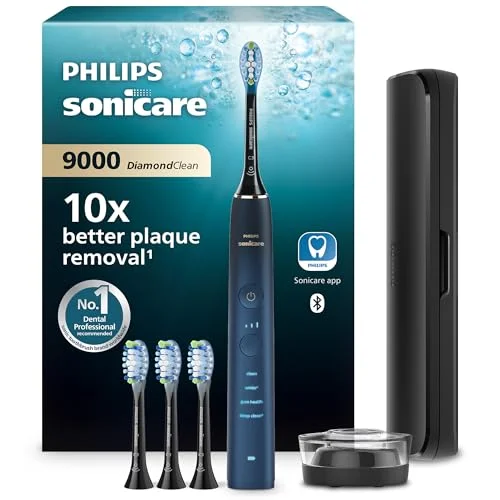
Where Oral-B oscillates and rotates a small round head, Philips takes a completely different approach. Sonicare brushes use a brush-shaped head that vibrates at very high frequency, driving a mixture of toothpaste and saliva between the teeth and along the gum line. The DiamondClean 9000 is the polished flagship of that range, and it makes the case for sonic cleaning beautifully — particularly if you find round-head brushes too aggressive.
Who is the Sonicare DiamondClean 9000 for?
This is the brush we reach for first when someone has sensitive gums, veneers, crowns or other dental work. The sonic action is inherently gentler than the scrubbing feel of a round head, so it cleans thoroughly without feeling harsh — which is exactly what sensitive mouths need. It also suits anyone who simply prefers a smoother, tingly clean to a brisk scrub, and who appreciates premium design touches like the charging glass and travel case.
It's less obviously the choice for someone on a budget, or for anyone who specifically likes the "scrubbed" feeling of an Oral-B round head. If you want sonic cleaning but the price gives you pause, the Ordo Sonic+ offers a very similar experience for less. The DiamondClean is the one to buy when comfort and finish matter as much as the clean itself.
How the Sonicare DiamondClean 9000 performs
Cleaning power
Sonic cleaning takes a brush or two to get used to — there's less of the "I can feel it working" sensation than with a round head — but the results are excellent. The high-frequency vibration is very effective between the teeth and around the gum line, and it leaves the whole mouth feeling clean and fresh. For everyday plaque control it's right at the top of our test.
Gentleness and the pressure sensor
The DiamondClean's defining quality is how kind it is to your gums. The sonic action doesn't physically scrub the gum margin, and a pressure sensor adds a further layer of protection by alerting you if you push too hard. For anyone whose gums have receded or who has had a dentist warn them about brushing too aggressively, this combination is genuinely reassuring.
Modes and feel
There are four cleaning modes and three intensities, which sounds like a lot but mostly comes down to a standard clean, a gentle setting for sensitive days and a whitening mode. The motor is quiet, the handle is slim and well balanced, and the whole brush feels every bit as premium as the price suggests.
Battery, charging glass and travel case
Battery life is around two weeks per charge, and this is where the premium pack shines: the brush charges by standing in an elegant glass, and the included travel case charges over USB so you're never caught short away from home. These are the touches that justify the higher price over a plainer sonic brush.
The honest downsides: head cost and the learning curve
The two things to weigh up are running cost and feel. Sonicare replacement heads cost more than basic Oral-B heads, so the long-term running cost is higher — worth remembering, since you replace heads every three months. And if you're someone who loves the brisk, scrubbed sensation of a round-head Oral-B, the gentler sonic feel can take some getting used to and may simply not be to your taste. Neither is a fault; they're the trade-offs that come with choosing sonic over oscillating.